Bookmark and Share
readbud - get paid to read and rate articles

Wednesday, October 13, 2010

Caladiums are tropical foliage plants

Caladiums are tropical foliage plants
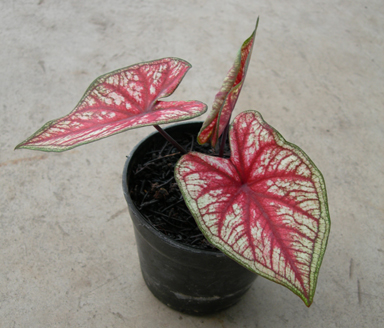
Caladiums are tropical foliage plants that provide a splash of color in summer flower beds. They grow well in shaded areas, containers, hanging baskets, and as borders.

You can add drama to any landscape with the addition of caladiums. Their brightly-colored leaves, in shades of red, pink, white and green, are perfect in a grouping or as an accent for other plants.

Make Sure the Soil is Warm Before Planting Caladiums

"The most important factor when planting caladiums is temperature," explains Noel Durrant, owner of Caladium World in Sebring, FL. "Ideally the night temperature should be 68 degrees or warmer on a consistent basis before planting caladiums." She says caladiums that are planted when nights are cool are very slow to germinate, even if you are having 80 degree day time temperatures.

Proper Watering is Important to Healthy Caladium Plants

Caladiums should be kept moist during germination, without allowing the soil to become soggy. Cool nights and excessive moisture can cause a bulb to rot. Durrant points out that once a caladium breaks ground it is easy to tell when to water as they will droop very easily if thirsty.

Tuesday, October 12, 2010

Tips to remain fertile caladium

Tips to remain fertile caladium

1. Sprinkling

Watering performed 2-3 days once in the dry season.

In the rainy season reduced the frequency sprinkling.

2. Fertilization

Give a high nitrogen fertilizer grades. N elements stimulate vegetative growth. When using fertilizer later explained, such as Star Dekastar and Asri, sprinkle when planting. However, if the use of fertilizers and quickly explained Growmore Hyponex eg, given 2 weeks after planting. Furthermore, fertilizing every 2-3 week in the rainy season, dry season, 4-6 week.

3. Loose planting medium

Media is a mixture of soil with humus, cocopeat, husk fuel, composting. 1:1 comparison. Or using 100% organic ingredients.

Monday, October 11, 2010

Caladium is not Always Harmful

http://4.bp.blogspot.com/_wBF3FgfDPDw/SnDsxCQBwKI/AAAAAAAAAqE/toyyAXr05aY/s400/Caladium.jpg
For the breeders of ornamental plants, it is not always detrimental to dormancy. Sleep period can be utilized so that the next growth period can have a number of leaf caladium a lot. The trick is very easy. Removed from the planting medium caladium then placed in a clean, dry container. Tubers are then placed in the shade and cool. Allowed to emerge the little caladium.

The first shoots that appear must be cut with the help of a sterile knife. The goal that does not inhibit subsequent shoot growth. Cutting these buds will stimulate the growth of other buds in greater numbers. After that, caladium tubers can be planted into a medium that contains a lot of organic material. Approximately two weeks later, the

Sunday, October 10, 2010

Caladium Because less water

Caladium Because less water

In an advantageous environment, taro grow normally and accumulate food reserves in the tuber. Thus, the organ in the land other than serve as a breeding are also useful as a warehouse storage of food reserves. The larger the tuber, the taro can have a longer sleep time as well.

Should immediately overcome dormancy. Therefore, the amount of food reserves are limited in the barn. If plants are too old to dormancy, plants that you have feared going to die.

Many ornamental plants devotee thinks that he has taro was dead. So no wonder if the devotee is then dismantle and dispose of her favorite plants. In fact, the plant is actually still alive. Only he does not remove the leaf to the ground.

There are many causes that can trigger your taro plants become dormant. Weather conditions which do not support and care methods that are not really able to stimulate dormant plants do. According to Jalil Yumal. F, the staff of Adelia Nursery, kaladium experienced dormancy during the dry season. Or it could be if the plants get a ration of less watering.

Conditions of water shortage can be overcome by doing a lot of watering frequency. In addition, planting media should also be mixed in a way that could hold water in sufficient quantities, and in the long term.

Jalil suggested planting media should kaladium contains many organic materials. Growing media such cocopeat blended with raw materials, shell ash and manure. Each comparison is 1: 1: 1. In addition to well capable of storing water, growing media, such as it is too loose. Growing media is too hard and solid could also trigger a dormant caladium.

Jalil overcome caladium dormant in the way make reepotting. Caladium tubers are removed from the pot. Before planting, the roots of Araceae family plants are soaked first in condensation of stimulants or hormones. Soaking was done for 15 minutes. Jalil trademark use of hormones to stimulate the growth of wholesale happy caladium tubers are dormant.

If all is done, caladium can be planted in many new tanama media containing organic material. Time hormone solution is splashed in the growing media. Planting medium should be damp conditions. After that pot disugkup using transparent plastic. The aim is to retain moisture. Kaladium are then put in place a shady (tend to be dark) and cool. Approximately 1-2 weeks later, shoot caladium is grown. You can move the plants into a single pot if caladium leaves already have as many as 3-4 pieces. Or after age 2 months.

Saturday, October 9, 2010

Media Not Infertile Caladium Asleep

Media Not Infertile Caladium Asleep
Although invisible to grow above the ground level, do not waste your own triggers. Perhaps these plants were undergoing a long period of sleep. Give perlekuan order caladium could rise and flourish again.

Caladium enchantment lies in its leaves. Caladium leaves have many shades. And with contrasting colors and flashy. But unfortunately this plant is widely known as a difficult plant to produce leaves in large quantities simultaneously. Even in unfavorable environmental conditions and improper handling can cause the body strike caladium experience.

The period of sleep or strike grows as it is often also referred to as dormant. In his native habitat, taro is often done dormancy as one of the main ways to survive in unfavorable environmental conditions. For instance, temperature and radiation are not appropriate. Lack of nutrients and water.

Thursday, October 7, 2010

Wednesday, October 6, 2010

Monday, October 4, 2010

Sunday, October 3, 2010

Saturday, October 2, 2010

Friday, October 1, 2010

Thursday, September 30, 2010

Wednesday, September 29, 2010

Tuesday, September 28, 2010

Monday, September 27, 2010

Sunday, September 26, 2010

Mixed Media


In addition to single media, caladium also grow well in the media mix. In Thailand from 12 nurseri the disambangi Trubus land-use mix media with leaf litter terkomposkan beans. What differs is only the composition, of 2:1 or 1:1. His superiority, make current drainage and aeration, so fertile and caladium growing rapidly.

A caladium decorative planters in Jakarta using three mixed media, raw rice husk, rice husk firewood, bamboo leaves and topsoil that has been filtered, one part each. Before use, he was steaming a mixture of these media for 30 minutes so sterile, so free of bacteria and fungi attack. Husks of crude and fuel was selected because the media makes good aeration. Meanwhile, bamboo leaf humus and nutrients play a role as a provider of water storage at the same time so that the media remain damp.

However, the use of fuel and humus bamboo husks should be extra careful. Therefore, the ruined husk fuel can be very dense. As a result, the porosity is reduced so that the roots disturbed. While bamboo leaf compost moisture levels only temporary, until the first leaf growth. Impact, planters should be diligent to add or replace the media.

Other media, mixed grilled cocopeat and husks. That's a look at the Anti nurseri Trubus, Ciawi, and garden belonging in Ciapus Ulih Sunardi, Bogor. Ulih also uses mixed media and humus andam and calothyrsus with 3:2 ratio. The result caladium growing up healthy and bright colors.

Nun in Sri Lanka, three planters met Trubus put on sandy soil as media mainstay. Pale brown sand fines such as sand beaches. Beneficial soil water needed to tie it aglaonema relatives. While the sand makes the media crumb texture, so that good aeration. Caladium grew lush and leafy.

Saturday, September 25, 2010

Single Media

Single Media
What is meant by the use of a single media type materials, such as humus andam, raw husks, or cocopeat. In the homeland, Dr Benny Tjia, practitioners ornamental plant in Bogor, using cocopeat media. Coco powder was capable of holding water in quantity and time. Pore structure with high catch and hold water. Will fit the decorative medium caladium damp. Moreover, coir dus-other-name easy to obtain and relatively cheap.

Generally, the degree of acidity of coir dust close to 6, while the medium caladium grow well at pH between 6.5 to 6.8 was. At nearly neutral conditions that could absorb nutrients more available plants such as nitrogen, calcium, phosphorus, and sulfur. To neutralize the pH, Benny mixed it with lime dolomite. Every one cubic media added 2 kg of dolomite.

Gunawan Widjaja in Sentul, Bogor, using the media andam humus. According to Wijaya's nursery owners, quickly exit the root caladium and faster plant growth although not in the fertilizer. Fair if it thrives aglaonema relatives. Humus has a high nitrogen content which stimulate vegetative growth. Humus mycelium composed of lignin, poliuronida, and C, H, O, S, and P. Organic materials that can improve nutrient available to plants, such as Ca, Mg and K. High humus absorption, 80-90% of the weight. That way, the media remain damp so that the caladium not dormant.

Single Media

In Cisarua, Trubus watch Thai caladium purplish red thrives even only use raw rice husk media. Section, raw husks are able to make good aeration of the media. According to Lanny Linga, Seederama nursery owners, the use of 100% raw husks fit in the garden located on the plateau. Where high humidity. Conversely areas with low humidity, such as Jakarta, quick dry husk, unable to hold much water. As a result of water shortages caladium, its growth was not optimal, and even dormant.

Therefore, in hot regions, the use of raw husks should not single. As the mixture maksumal 25% of the total volume. It's just avoid that contain elements of Mn fertilization. For raw husks have a high content of silicate and manganese. media control to the degree of acidity is not under 5. at pH, the availability of Mn that can be absorbed plant increases. As a result of heavy metal poisoning caladium it so that root and leaf cells Araceae family members were damaged.

Friday, September 24, 2010

Media of Concoction Caladium


Caladium roots need lots of oxygen in the soil. The bigger the root, the more oxygen is needed, especially for cell growth next. It's natural to prefer caladium porous media. With a hollow structure of the media, the circulation of air and drainage run smoothly. Also the media is also required to damp and wet.

In essence, the media should be to save water and not easy to condense. Solid media causing stagnant water so that the low air aeration. Symptoms appear, the leaves and stems wither. Healthy roots are white and have fine hairs. If aeration is low, white roots turned brown and then black. Reduced the number of root hair was not even there. Yet it serves to absorb nutrients. In addition to aeration problems, solid media are also invited bacteria and fungi causing decay.

The role of media is very aware of the planters caladium. Of coverage in three Countries Trubus, media selection based on the pegaruh climate, availability of raw materials, and conformity with the needs of caladium. As a result, 21 planters in Thailand, Indonesia and Sri Lanka using different media. Each has its own media for growing herbs aglaonema's relatives.

Although different in the three countries, but caladium remain fertile body, excellence, and look stunning. Secret of his success lies in the composition of raw materials and selected media. If grouped, selected media, consisting of single and mixed mediai.

Thursday, September 23, 2010

Near with More Caladium

Near with More CaladiumAlready 1.5 century cultivated caladium. alokasia similar plant, Colocasia, and Xanthosoma was rooted, fibrous rooted, and flowering perfect. Sugar-apple fruit shape and similar in it to accommodate 200-500 bak brown sesame seeds. petiole 40-90 cm high. leaves reached 15-46 cm long with a variety of views, such as a heart shape, length and rounded. fee that is a mini size suitable as an ornamental porch. of natural beauty, caladium cited as the "queen of ornamental plants."

In addition to beauty, some type of caladium believed to cure disease. Burkill, in a book called A Dictionary Of The Economic Products Of the Malay Peninsula, says C. humboldtii, Schott (C. argyrites, Lem) jujal in many Chinese herbal shops.

C. humboldtii also often used as breeders by the penyilang to produce a mini-leaved caladium. Not only that, C. bicolor and C. hortulanom made diligent breeders to produce new kinds. Now it presents a new hybrid varieties graced the stock of ornamental plants in the ground water.

History records caladium ancestors originated from Amazon forest and temperate regions of South America Tropical. Call it Argentina, Bolivia, Brazil, Panama, Peru, Colombia, Costa Rica, of Ecuador, French Guiana, Guyana, and Venezuela. Although originating from the Americas, but cultivation was first performed in Europe in the era of 1700.

In the journal of University of Florida, Robert A. DeFilipps, Shirley L. Maina, and Juliette Crepin said caladium into Continental Europe in 1704. At that time C. bicolor (Aiton) Vent from Suriname sent to the Amsterdam Botanic Garden, the Netherlands. Planters were interested in crossing. The result, obtained 1500 new varieties. Until now Europe's caladium planting expanded to 688 ha. Preferred is a lively and leaved caladium patterned width.
Bookmark and Share